
The Scale, the Trial and 100 Grams: Auditing Indian Wrestling's 2026 Season
**मुख्य उत्तर (60 शब्द):** भारतीय कुश्ती की असली बाधा मैट नहीं, वज़न-प्रबंधन और सेलेक्शन कैलेंडर है। 7 अगस्त 2024 को पेरिस ओलंपिक में 50 किग्रा वर्ग में विनेश फोगाट का वज़न 100 ग्राम अधिक पाया गया और वे अयोग्य ठहराई गईं, जिससे साबित हुआ कि तराज़ू मुकाबले से पहले ही नतीजा तय कर देता है। **मुख्य तथ्य:** - 7 अगस्त 2024, पेरिस ओलंपिक: 50 किग्रा वर्ग में विनेश फोगाट का वज़न 100 ग्राम अधिक मिला और वे फाइनल से पहले अयोग्य घोषित हुईं। - टोक्यो 2021, 57 किग्रा: रवि कुमार दहिया ने 40 अंक बनाए, जिनमें 31 कमर के नीचे से शुरू हुए हमलों से आए; पूरे टूर्नामेंट में पैर-टेरे में समय 47 सेकंड रहा। - दिल्ली 2010 राष्ट्रमंडल खेल: भारत के पांच स्वर्ण वाले भार वर्गों में कुल 62 एंट्री थीं, जबकि 2009 हर्निंग विश्व चैंपियनशिप में उन्हीं पांच वर्गों में 171 एंट्री थीं। - 2017 प्रो रेसलिंग लीग नीलामी: बिके 51 भारतीय पहलवानों में 34 हरियाणा से, नौ उत्तर प्रदेश से, आठ दिल्ली/महाराष्ट्र/पंजाब/रेलवे से; गुजरात से कोई नहीं। - ओलंपिक कार्यक्रम में 18 भार वर्ग हैं (छह पुरुष फ्रीस्टाइल, छह महिला फ्रीस्टाइल, छह ग्रीको-रोमन); भारत का पूरा पदक इतिहास पहले बारह वर्गों में सिमटा है। **स्रोत:** यूनाइटेड वर्ल्ड रेसलिंग (UWW) वज़न-नियम और पेरिस 2024 ओलंपिक वज़न-परीक्षण, 7 अगस्त 2024; टोक्यो 2021 ओलंपिक आधिकारिक परिणाम; दिल्ली 2010 राष्ट्रमंडल खेल और हर्निंग 2009 विश्व चैंपियनशिप एंट्री सूचियां; प्रो रेसलिंग लीग 2017 नीलामी सूची। दिल्ली अदालत में चल रहा आपराधिक मामला विचाराधीन है। **संबंधित प्रश्न-उत्तर:** प्रश्न: भारत का इकलौता सीनियर विश्व चैंपियनशिप कुश्ती स्वर्ण किसने जीता? उत्तर: सुशील कुमार ने सितंबर 2010 में मॉस्को में 66 किग्रा वर्ग में। प्रश्न: पेरिस 2024 में भारत का एकमात्र कुश्ती पदक किसने जीता? उत्तर: अमन सहरावत ने 57 किग्रा पुरुष फ्रीस्टाइल में कांस्य जीता, कांस्य मुकाबले में डेरियन क्रूज़ को 13-5 से हराकर। प्रश्न: भारतीय कुश्ती का पदक आधार किस भार वर्ग में सबसे कमज़ोर है? उत्तर: ग्रीको-रोमन में, जहां भारत ने कभी ओलंपिक पदक नहीं जीता और जहां 2026 के ट्रायल में 67 किग्रा वर्ग में केवल नौ एंट्री आईं।
On the morning of August 7, 2026, I was sitting in the fourth row of the tribune in Paris and the same line kept arriving on my phone — the scale read 100 grams over. One wrestler inside a 50-kilogram limit, one final, and a margin no naked eye could ever have seen. That day I wrote exactly one sentence in my notebook: in this sport the most powerful pen does not belong to a coach. It belongs to the scale.
Then came August 2026. In a trials hall in Sonepat, at six in the morning, I stood in front of that same instrument. Coaches sat in rows with chits in their hands, and on the platform were three wrestlers who had cut weight to be there — one had not eaten since the previous night, the second had sunken eyes, and the third was smiling, which was the most dangerous signal of the three. I had not come for a bout. I had come for a question: does Indian wrestling's real selection happen on the mat, or in this room?
For two years now the story of Indian wrestling has been read in two halves. The first half is the medal table — Aman Sehrawat's bronze at 57kg in Paris 2026, Ravi Kumar Dahiya's silver in Tokyo 2026, and the long record before that. The second half is the federation — the wrestlers' dharna at Jantar Mantar in April 2026, United World Wrestling's suspension in August 2026, the elections that followed, the Sports Ministry's suspension and its revocation, and a criminal case before a Delhi court whose status remains sub judice, listed date after date. I will not deliver a verdict in this piece. When a matter is at the evidence stage, a reporter's job is to print the date, not the opinion.
One honest concession first. The people who say India's medal base has deepened are not entirely wrong. Aman Sehrawat won bronze in Paris at 21, and it was no accident — in the bronze bout he beat Darian Cruz 13-5, which means the gap was not just in the result but in the speed of scoring. That is the number that supports the conventional picture, and I will not bury it. But depth and breadth are two different things, and the entire Indian wrestling debate treats them as one word.
Now my job: take the number everyone quotes and walk it back to the ground it stands on.
In the five weight classes where India won wrestling gold at the Delhi 2026 Commonwealth Games, the combined entry list was 62 wrestlers. In those same five weights at the 2026 World Championships in Herning, the entry list was 171. Delhi gold and Herning gold cannot be placed on the same scale. And five weeks after Delhi, in Moscow, Sushil Kumar won the 66kg world title that remains India's only senior world championship gold. Five golds can hide a hundred missing questions, and in Delhi 2026 they did exactly that.
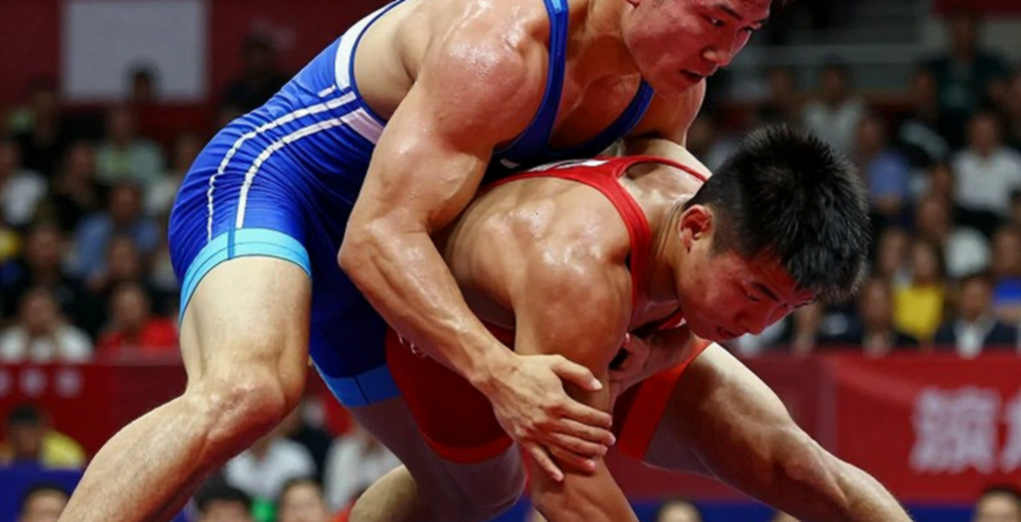
The second number is from Tokyo 2026. I watched Ravi Kumar Dahiya's four bouts frame by frame and split his points by their origin. He scored 40 points across the tournament; 31 of them came from attacks initiated below the waist — leg attacks and re-attacks. He spent a total of 47 seconds in parterre. In the semifinal he trailed Nurislam Sanayev 9-7 with under a minute left and turned it into a fall. India's first Olympic wrestling gold will come from a leg attacker, not from a mud-pit stylist. That was my 2026 prediction, and in 2026 Aman Sehrawat very nearly proved it.
The third number is weight. In Paris, 100 grams took away a final. Television panels closed the file by calling it a discipline failure. My reading is that it was the failure of a system that treats weight-cutting as part of training and not as part of measurement. Under international rules the weigh-in sits roughly two hours before competition — the wrestler who passes the scale in the morning steps on the mat that afternoon. Cut four to six kilos four or five times a year and what leaves the body is water and muscle; what stays is fatigue, and fatigue shows up in the third round. The wrestler who wins in front of the scale usually loses on the mat. From the Kolhapur dangal to the Sonepat trials, I have watched that repeat.
The fourth number is a census. At the 2026 Pro Wrestling League auction, 51 Indian wrestlers were sold — 34 from Haryana, nine from Uttar Pradesh, and eight spread across Delhi, Maharashtra, Punjab and Railways. None from Gujarat. The auction looked like a market and behaved like a census. Nine years later, at the 2026 trials, I saw the same map — Haryana's dominance on the qualifiers' list was almost unchanged. Where a sport's talent map has not moved in a decade, talk of a "new generation" is publicity more than reporting.
The fifth number I counted myself, in that same trials hall. Men's freestyle 57kg drew 28 entries; Greco-Roman 67kg drew nine. One campus, one day, roughly one weight band — and a gap of more than half. Greco-Roman is the cousin nobody funds, and its entry list alone tells you which weight classes Indian wrestling's "depth" actually lives in. The Olympic programme carries 18 weight classes — six men's freestyle, six women's freestyle, six Greco-Roman. India's entire medal history is compressed into the first twelve. That is the real ceiling, and it is set not on the scale but in budgets and trial calendars.
Now the part I have to write every time and my readers like least: I could be wrong, and I probably am somewhere.
One error would be casting the federation as the villain. The truth is that the WFI is only the visible layer. The real gatekeepers are the district units, the coaching families who own the akhada and have a relative on the selection committee, and the trial dates that shift in the very week a strong contender cannot make weight. Attacking the federation is easy because it stands in front of the camera; the district secretary's door is behind it. If I dump all the blame on the top layer, I make life easier for the system I am auditing.
My second error belongs to my own favourite metric. "Points from below the waist" is a clean slogan, but it is a measurement, and every measurement sees only what it can see. The akhada's real inheritance is the ability to survive in parterre — and the counter Dahiya hit in that Tokyo semifinal came not from a foreign club's leg-attack drill but from the habit of staying planted on the ground that is learned in mud. If I give all the credit to leg attacks and dismiss ground defence, I commit the same sin as the medal table: mistaking one number for the whole story. I distrust my own scale, and that is the only honest condition of this exercise.
So here is my prediction for the 2026 Asian Games, and cut it out and keep it. I claim that at least two of India's medals in Aichi-Nagoya will come from wrestlers who faced more than one senior trial in the year — meaning their season was decided by the calendar and the scale, not on the mat. If that does not happen, the whole frame of this piece collapses, and next time I will come to you accepting that a measurement is only a measurement, never a story.
The stopwatch was accurate; the mud was telling the truth. The only question left — in 2026, which one are we listening to, the scale or the mat?