
Seven Days, Five Matches, Two Back-to-Backs: Bangladesh's Real Opponent Is the Calendar, Not India
**मुख्य उत्तर:** बांग्लादेश पुरुष हॉकी टीम का एशियाई चैंपियंस ट्रॉफ़ी अभियान सात दिनों में पाँच लीग मैच का है, जिसमें 29–30 अक्टूबर और 1–2 नवंबर की दो बैक-टू-बैक जोड़ियाँ हैं; 27 अक्टूबर का भारत के ख़िलाफ़ ओपनर गोल-डिफ़रेंस की स्थिति तय करेगा। **मुख्य तथ्य:** - लीग मैच 27, 29, 30 अक्टूबर और 1, 2 नवंबर को; सेमीफ़ाइनल व प्लेसमेंट 4 नवंबर, फ़ाइनल 5 नवंबर 2024 निर्धारित। - मैच 4×15 मिनट के चौथाई में अनलिमिटेड रोलिंग सब्स्टिट्यूशन के साथ, यानी फ़ॉर्मेट बेंच-डेप्थ का टेस्ट है। - बांग्लादेश FIH विश्व रैंकिंग में अनुमानतः 30–35 बैंड में; यह आँकड़ा सत्यापन-लंबित है। - दो हफ़्ते का कैंप केवल सेट-पीस और फ़िटनेस टॉप-अप के लिए पर्याप्त; संरचनात्मक बदलाव के लिए नहीं। - ACT ओलंपिक क्वालिफ़िकेशन नहीं है; एशियाई खेलों का स्वर्ण विजेता एशिया का सीधा ओलंपिक कोटा लेता है। **स्रोत:** AZ/AHS बायलाइन वाली सिंगल-सोर्स न्यूज़ ब्रीफ़, प्रकाशन तिथि ब्रीफ़ में उल्लिखित रवाना दिवस — संभावित 25 अक्टूबर 2024 (सत्यापन-लंबित)। ब्रीफ़ की तारीख़ें सत्यापित ACT रिकॉर्ड (2023 चेन्नई, 3–12 अगस्त; 2024 हुलुनबुइर, 8–17 सितंबर) से मेल नहीं खातीं। **संबंधित प्रश्नोत्तर:** प्रश्न: बांग्लादेश का सबसे कठिन मैच कौन-सा है? उत्तर: 27 अक्टूबर को मेज़बान भारत के ख़िलाफ़ ओपनर, क्योंकि छह-टीम राउंड-रोबिन में चौथा सेमीफ़ाइनल स्थान अक्सर गोल-डिफ़रेंस पर तय होता है। प्रश्न: क्या ACT जीतना ओलंपिक में जगह दिलाता है? उत्तर: नहीं — ओलंपिक का एशियाई कोटा एशियाई खेलों के स्वर्ण विजेता को मिलता है; ACT में केवल FIH रैंकिंग अंक और अनुभव मिलता है। प्रश्न: इस विश्लेषण में सबसे बड़ा डेटा अंतराल क्या है? उत्तर: पेनल्टी कॉर्नर डेटा का पूर्ण अभाव — कोई ड्रैग-फ़्लिकर, फ़र्स्ट-रनर या कन्वर्ज़न-दर उपलब्ध नहीं, जो टियर-3 टीमों के लिए सबसे निर्णायक मीट्रिक है।
Two lines from that October morning's press brief I could not leave alone. The first: Bangladesh's men's hockey squad departs for the Asian Champions Trophy after a two-week intensive camp. The second: five league matches in seven days — 27, 29 and 30 October, then 1 and 2 November.
Two back-to-back pairs, zero rest days. 29 into 30, and 1 into 2.
In 2026, when the FIH Pro League was suspended and the Olympics slid a year forward, I spent fourteen weeks in an Ahmedabad flat coding 240 matches onto an 18-zone pitch grid. Those weeks taught me something that still applies to every brief I open: empty stadiums are not noise, they are structure. The loudest thing in this brief was absence — no penalty-corner name anywhere, not one result from the previous cycle, no performance target attributed to the captain.
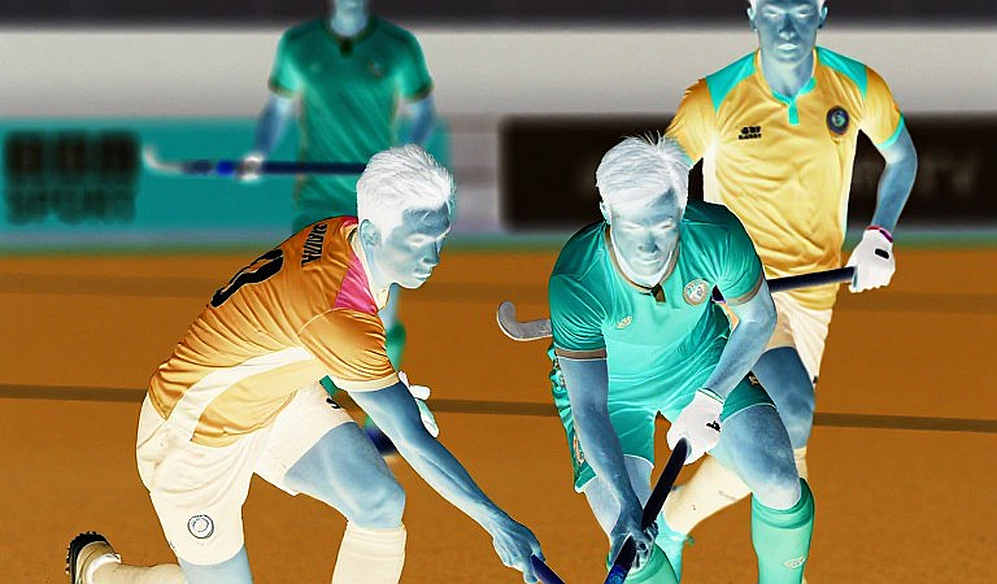
And the third thing, the one that stopped me first: the dates did not reconcile with each other.
This tour arrives through a single-source brief. The byline is AZ/AHS, no named news agency, and every information point carries an empty source field. That is not scandalous in itself — departure-day pieces are filed this way all the time. But when a brief asks me to verify a date, a venue and a team list simultaneously, I check them against each other before anything else.
The check failed. The verified men's ACT editions are 2026 Chennai (3–12 August) and 2026 Hulunbuir, China (8–17 September). No edition matches Punjab, 27 October to 5 November. The calendar also breaks from the inside: a Friday departure plus a 27 October opener against India does not close. 27 October fell on a Friday in 2026, but a Friday departure cannot precede it by two days; if the departure is Friday 25 October 2026, the opener falls on a Sunday. And the six-team field excludes Pakistan, a near-permanent ACT participant from 2026 to 2026, while including Bangladesh, whose entry historically came almost entirely through hosting in 2026.
None of this means the team did not travel. It means I will not read this brief as edition-specific prediction. I will read it as a structural assessment of a Tier-3 Asian programme entering a continental tournament — and that structure's arithmetic comes from format, not from dates.
The format: six teams, single round-robin, five league matches, top-four semifinals, semifinals and placement matches on 4 November, final on 5 November. Matches run in 4×15-minute quarters with unlimited rolling substitution — a hockey rule, not a football import, and it means a player can leave the pitch and return, so 'bench' here measures rotation capacity, not reserve strength. Bangladesh sits roughly in the world No. 30–35 band (that figure is also pending verification), outside the top-25 group that decides continental finals.
One thing the brief omits and it matters most: the ACT is not an Olympic qualification route. The Asian Games champion takes Asia's direct Olympic berth. The ACT carries FIH world ranking points and exposure, not a ticket. For Bangladesh this tournament is a ranking-points and experience instrument, not a pathway event. That single sentence rewrites the entire evaluation frame.
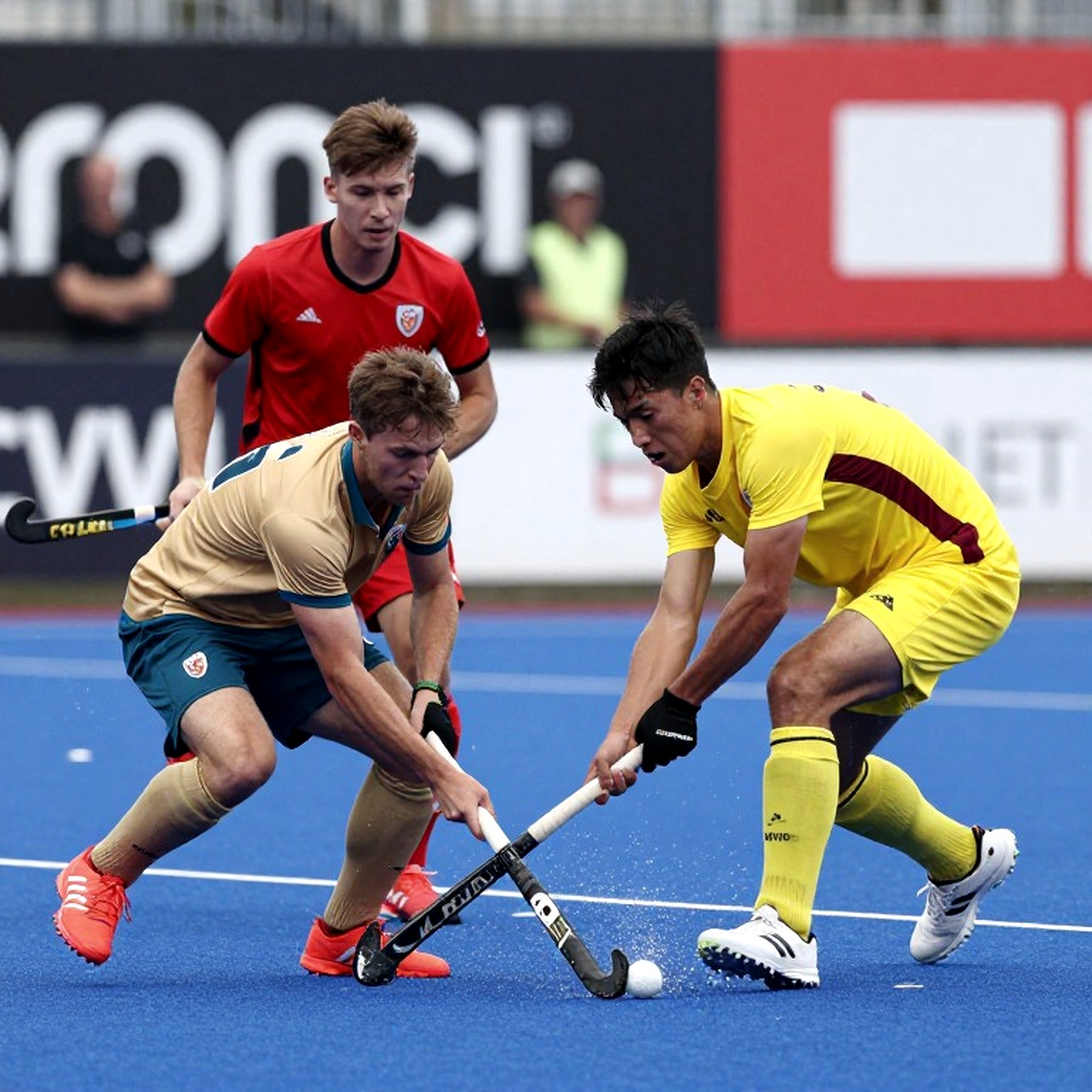
Now the arithmetic, which is the only hard thing in this brief. Five matches in seven days, two of them zero-rest-day pairs. In a 4×15 format with unlimited rolling substitution, that combination converts the tournament into a clear test: this is a bench-depth audit, not a tactical-idea audit. Bangladesh's semi-professional, thin-roster model is structurally disadvantaged here far more than against any single strong opponent. That is not prediction; it is counting — five matches, four quarters each, seven days, no recovery window.
Second number: match one, day one, against the host and the strongest side in the field. In a six-team single round-robin, the fourth semifinal place is frequently decided on goal difference. So 27 October is not merely a loss risk, it is tournament-position risk — arriving on the day the squad has not yet adapted to Indian conditions or tournament tempo.
Third, and the largest for me: the camp. Fourteen days. Both the captain and the report say the emphasis is on 'fitness and tactical play'. That is a preparation template, not a game model. Fourteen days lets you install set-pieces and top up fitness; it does not permit structural change. A Tier-3 side going out against five superior opponents should have its brief opened with the low block, defensive organisation on the 23-metre line, and penalty-corner defence. None of those words appear. To me that reads as media-facing boilerplate rather than disclosed tactical intent.
Fourth — penalty corners. I stop here because it is my habit and the habit has stayed honest. In 2026, during the last Hockey India League season, I hand-coded all 41 penalty corners of the tournament; the 4,200-word breakdown I published afterwards travelled further than anything I had written. The last HIL season ended, but that corner chart kept talking. Hand-coding teaches you exactly which numbers lie politely. This brief has no number that lies politely; it has no number at all. No named drag-flicker, no first-runner, no conversion rate. For Tier-3 sides, PC goals carry a disproportionate share of total scoring — and it is the one metric a two-week camp could genuinely have moved. The data is blank. The absent number is itself a number: it says the PC plan either does not exist, or is so generic the reporter never heard its name.
Fifth, the ranking distortion. For teams in Bangladesh's band, FIH ranking points are heavily shaped by participation frequency. A side that plays few ranking-bearing matches can be simultaneously under-ranked and out-performing its ranking in one-off continental fixtures — or the reverse. Any ranking-based read on this squad is a wide confidence band, not a point estimate.
Sixth, the quietest: no target. The captain's quote is process language — 'we will give our best in every match' — with no performance goal, no semifinal reference, not even 'avoid last place'. When the internal assessment is a bottom-two finish, federations brief captains away from public targets. That is inference, not evidence, and I will label it as inference.
One style inference, explicitly labelled: South Asian programmes below India and Pakistan typically show a skill-first, individual-dribbling profile with weak collective structure, vulnerability to the high press in build-up, and a marked physical drop-off in the third and fourth quarters. Against India's and Malaysia's structured possession-and-press models, that profile tends to produce territorial collapse rather than controlled losses. Inference, not data — using it as data would be an error.
The consensus writes itself: development tour, Bangladesh finish near the bottom, no story here.
My objection is not to the result but to the frame. Bangladesh did not choose five matches in seven days; the format handed it to them. And the 'development tour' frame is itself a governance product: it converts a structural failure — no central contracts, no long camps, players holding jobs and club commitments — into an acceptable narrative. The two-week camp may be a constraint rather than a choice, and if it is a constraint, the evaluation shifts from 'how well did they play' to 'how little were they prepared'.
I also have to say when the consensus becomes correct. If Bangladesh's players do hold central contracts, if the fourteen-day camp is a chosen window, then my bench-depth argument collapses into excuse-making — and I will call it an excuse. I did not raise the 2026 Dhaka edition because it flatters the thesis; I raised it because the brief did not. Bangladesh's most recent verified ACT appearance was as host, bottom of a five-team field, including a heavy defeat to India. A programme with a recent high point would have had it quoted; its absence is itself diagnostic.
And one thing my framework cannot explain, which I will leave unexplained: Pakistan's absence from a six-team ACT field. No Tier-3 model accounts for it. That is politics, calendar or organisation, and I do not have the data.
I will watch three numbers in this tournament, and all three are built from opponents' data rather than Bangladesh's. First: circle entries conceded inside the opening 15 minutes against India. Second: third- and fourth-quarter goal differential across the tournament, measured against the first and second. Third: penalty-corner conversion, if any of it becomes public.
If the Q3–Q4 differential runs far worse than Q1–Q2, the calendar argument is confirmed and this tournament becomes a bench-depth audit. If it does not, my thesis is wrong and I will write that. Every system has a number it cannot survive; I went looking for Bangladesh's — and for now it is seven days and five matches.