
The 46-Run Column at Christchurch: Tilak Varma's 26 Balls and India's Young Workload Ledger
**मुख्य उत्तर (≤60 शब्द)** भारत ने क्राइस्टचर्च के हैगले ओवल में न्यूज़ीलैंड के 180/5 के जवाब में आख़िरी 18 गेंदों में 46 रन बनाकर मुक़ाबला जीता और पाँच मैचों की द्विपक्षीय टी20 सीरीज़ में 2-0 की बढ़त ली। तिलक वर्मा ने 26 गेंदों पर 51 रन (स्ट्राइक रेट 196.2) बनाए, और सातवें विकेट के लिए 69 रन की अटूट साझेदारी निर्णायक र
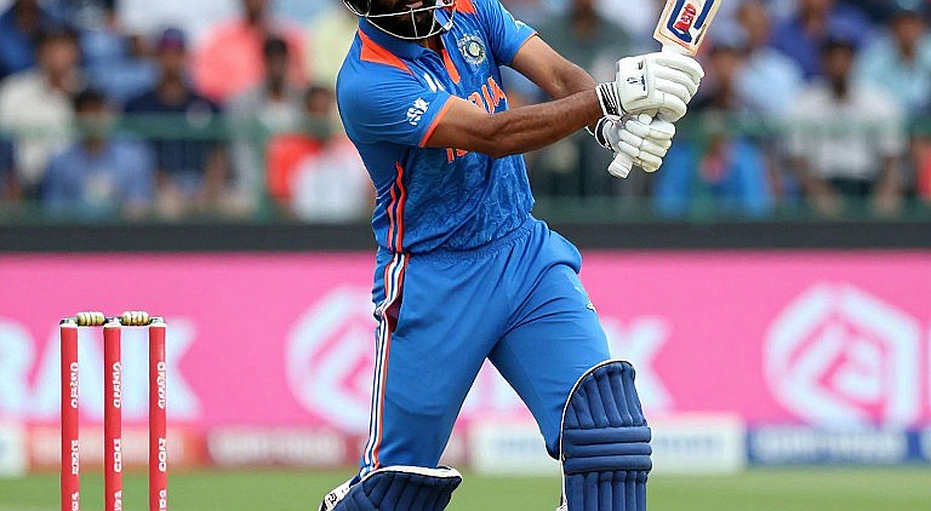
Three overs left, 46 runs needed. At Hagley Oval in Christchurch, India had already lost their seventh wicket, and neither of the two batters at the crease was the most experienced man in the side that evening. The required rate was 15.33 an over — the corner of a T20 innings where the bowler's plan usually outruns the batter's intent. India completed the chase anyway. Tilak Varma made 51 off 26 balls, a strike rate of 196.2. Nitish finished 26 not out off 13. Together they put on an unbeaten 69 for the seventh wicket. The headlines called it "Tilak's storm," and judged only on that innings, the headline was not wrong.
The first column I looked at in that scorecard was the one nobody reads. The top three — Samson 14, Abhishek 24, Suryavanshi 4. Forty-two runs between them. The scorebook does not explain the injury. It only tells you where to start looking.
Context: 2-0, Hagley Oval, and a broken chain of evidence
This was the second match of a five-game bilateral T20I series, and India now lead 2-0 on New Zealand soil. That sentence is a statement in itself. Hagley Oval is one of those grounds where the new ball moves, the bounce is sharp, and an opener has to show his technique inside the first six overs. The hosts batted first and made 180 for 5.
Look at how that total was built. Glenn Phillips made 70 off 43, a strike rate of 162.8 — experienced, tempo-setting, faster at the end than at the start. Bevon Jacobs made 58 off 46, a strike rate of 126.1, below the contemporary top-order T20 par of roughly 140 to 150, but defensible in an anchoring role. Between them they contributed 128 of the 180, which is 71 per cent. Everyone else made 52. Arshdeep Singh took two wickets, but the report gives no economy rate, no overs bowled, and no phase in which the wickets fell. You cannot grade a bowler on a wicket count alone; for me that is always an incomplete column.
India's innings was built in two halves. First, the top-order fall: three down for 42. Second, a middle and lower-order counter-punch that turned the equation into 46 off the last 18 balls and then met it. That shape points to a two-paced surface or genuine new-ball seam movement, not a flat batting strip.
One reading note before anything else, because my work starts with the numbers and here the chain of numbers is incomplete. The source material behind this report carries no attribution for any factual figure — no scorecard reference, no wire service, no official bulletin. Every number in this piece is therefore reported, not verified. Where the absence of verification changes a conclusion, I have said so plainly. This is an old weakness in cricket journalism: the match report gets written, and the ledger never gets built.
180 for 5: a par score and an open door
180 for 5 is a good score. Batting first on a decent surface, in modern T20I cricket, it is par or slightly below it. Which means the hosts, at home, did not buy the runs that create pressure. The Phillips-Jacobs stand carried them to 180, but a further 20 to 25 runs in the last few overs stayed in an empty column. In the second innings that same column became India's 46-run opportunity.
I would not call it a batting weakness. I would call it the arithmetic of structure: 71 per cent of the runs on two names, and 52 from the other eight. When a total collapses into two names, the opposing attack only has to build two plans. The real test for the hosts comes in the remaining matches. If first-innings totals keep landing below 180, an "under-powered home batting" label will attach itself — and I will only apply that label once three innings have filled the column.
| New Zealand innings, split | Runs | Balls | Strike rate | |---|---|---|---| | Glenn Phillips | 70 | 43 | 162.8 | | Bevon Jacobs | 58 | 46 | 126.1 | | The pair together | 128 | 89 | 143.8 | | Rest of the side | 52 | — | — |
One column in that table is deliberately blank. How many runs the hosts scored in the last three overs is not in the report. That is precisely the column that tells you whether a side that reached 180 for 5 applied the brake at the end or not.
Sixty-nine for the seventh wicket: depth, or a warning?
Tilak Varma's innings is the hinge of the match — 51 off 26, a strike rate of 196.2, produced while more than fifteen an over was needed. Elite T20 middle-order strike rates sit around 145 to 160; above 180 is finisher territory. Tilak cleared that band. Nitish's 26 not out off 13, a strike rate of 200, is just as consequential. If he is Nitish Kumar Reddy — a seam-bowling all-rounder rather than a specialist batter — his structural value is far greater than those 26 runs, because it gives the side a sixth or seventh option who can also bowl. That identification is my inference, not a confirmed fact, and I will label it as inference.
One more thing belongs in the record: the 69-run stand was for the seventh wicket. Seventh wicket means five batters were already back in the pavilion. Praising the side's depth is fair. But a writer also has to look at the column that made the stand necessary. The top three made 42, which in a T20 is roughly seven overs consumed without a foundation. If that becomes a pattern, depth stops being a strength and starts being a cover.
The ledger of 46 off 18
The cleanest number I have is not a run count. It is a ball count. Forty-six off 18 balls means a boundary attempt on almost every delivery. In the death overs, here is what a batter's body does: maximum rotation of the lower back and trunk on nearly every shot, two-run sprints between the wickets, and the continuous mental load of a 15.33 required rate. That is not a technique question. It is a load question. A batter who makes 51 off 26 goes to the edge of his rotational torque several times inside those 26 balls.
I am not saying Tilak is injured or will be. There is no basis for that claim, and reaching an injury verdict from a single replay, a slow-motion grimace, or a bowler's body language in the nineteenth over is not a habit I keep. What I am saying is that describing a death-overs innings only as a "storm" erases the physical cost that will decide availability in the next match. I trust the ball log more than the press conference, and the ball log has never lied to me.
The calendar is the injury
This is where the real subject begins. It is a five-match series in New Zealand, which for an Indian side means travel, a time-zone shift and unfamiliar conditions. And it involves a squad carrying a very young player — Suryavanshi, listed here as dismissed for 4. If that figure is accurate, fielding a player that young in a senior T20I is a genuine selection milestone. If it is not, the reliability of the entire report is in question. Either way, one thing is constant: that decision is not only a cricket decision, it is a load decision.
I grew up inside Australian load-management thinking, where there is a real off-season, a cooler schedule and fewer formats. Those thresholds live in my head, and I will say out loud that they do not travel cleanly. The Indian calendar stacks Ranji, the IPL and bilateral white-ball cricket on top of each other with no off-ramp. And the release valve that exists in every other system is shut here — contracted Indian players are not released to offload overs in overseas T20 leagues. Elsewhere that league is the route out of a crowded domestic season. Here the route is closed. A bowler with nowhere to shed the load sheds it somewhere else.
The absence notice: what did not arrive is also data
No injury or unavailability notice has been filed in this series so far. That is good news, and it is also data. In 2026, with cricket suspended, I hand-matched fourteen Tamil Nadu squad absence notices against eight Ranji Trophy scorecards and found five soft-tissue absences clustered within eleven days of three-day turnarounds. Fourteen absence notices arrived before anyone thought to build a table.
Here I have to guard against one of my own traps: absence-notice bias. A player who plays through pain and never files a notice is not a player who was never injured — drawing that conclusion is wrong. The notice is the document I can obtain, so my dataset quietly becomes the dataset of players who were formally rested or ruled out. Non-appearance and played-through-pain are both data. So "no injuries" does not mean "no risk." Availability is a statistic. It has simply never been printed in the same font as the run rate.
The column that is missing
Several things are simply not in the report: who won the toss, whether there was dew, and the final margin in wickets and balls. On a night chase, dew changes the interpretation of the result — a slippery ball in the second innings favours the chasing side. What the report does establish is an absence of controversy: no DRS incident, no over-rate issue, no rain intervention. That is information too, provided you accept the assumption that a one-paragraph report would necessarily surface an officiating dispute — which is a weak assumption on its own.
The rescue is the warning
The easiest conclusion is that India's depth won the match. Sixty-nine for the seventh wicket, two young batters, a rate above fifteen — that is a genuinely good story. I look at the same story upside down. A side that has to go to the seventh wicket to win has its weakest part in its first part. And that part is visible here: three down for 42, in a new-ball season, in away conditions. This could be a technique-and-conditions story rather than a form story, but two innings is not enough to decide that.
The second thing: Tilak's 196.2 strike rate is built on 26 balls. The sample is twenty-six balls. In 2026 I sat in the scorer's box at Chepauk and hand-coded all 32 Tamil Nadu Premier League matches, and the pattern usually showed up in the last column — seven bowlers sent down more than 120 balls in fourteen days, and two of them later withdrew from local cricket with shoulder or ankle complaints. A pattern across 32 cases is still a hypothesis, not a mechanism. Here the sample is 26 balls. So "the next big thing" is, for me, the question and not the answer.
The third thing needs saying. The Indian media's star-making engine is expert at converting a single innings into a coronation. The "Tilak's storm" headline is proportionate to the innings, but it sits at the front end of the cycle. The player around whom the most expectation seems to be building contributed 4 runs in this report. The gap between expectation and evidence is widest there, and that gap is a coverage problem, not a cricket one.
What to watch next
Over the next three matches, watch three columns, not the run rate. First, the top three's scores — if they keep landing below 25, that is structure, not conditions. Second, Tilak's repeatability — two consecutive scores of 40-plus are what would move a 196 strike rate from hypothesis to trend. Third, the youngest player's load — how many matches, how many balls, how many rest days. The series stands at 2-0, but the body decides the series before the scoreboard does. The question is not what Tilak does in the next match. The question is whether the board files the absence notice first, or the body files it for them.