
The Scoreboard in Ahmedabad Will Lie: Against England, India's Real Test Is Its Bench
**मुख्य उत्तर** कॉमनवेल्थ कबड्डी चैंपियनशिप 2026 के मुकाबला 4 में भारत का सामना इंग्लैंड से है, पर यह मैच भारत की ताकत नहीं, उसकी बेंच की परीक्षा है। ईरान और चीनी ताइपे की गैर-मौजूदगी में बड़ा अंतर कम जानकारी देता है। **मुख्य तथ्य** - मुकाबला: कॉमनवेल्थ कबड्डी चैंपियनशिप 2026, मुकाबला 4, भारत बनाम इंग्लैंड, अहमदाबाद; भारत का पहला मैच। - भारतीय स्क्वाड रोटेटेड है: कई वरिष्ठ खिलाड़ी आराम पर, कई युवाओं को मौका। - कप्तान सुरजीत सिंह, उपकप्तान नवीन कुमार; सूची में राज्य या फ्रैंचाइज़ी नहीं दी गई। - ईरान और चीनी ताइपे इस संस्करण में नहीं खेल रहे; दोनों को भारत का प्रमुख प्रतिद्वंद्वी बताया गया। - उपलब्ध सामग्री में कोई रेड-पॉइंट, टैकल या रेड-सक्सेस आंकड़ा नहीं दिया गया है। **स्रोत** कॉमनवेल्थ कबड्डी चैंपियनशिप 2026 मुकाबला-4 पूर्वावलोकन विश्लेषण दस्तावेज़; प्रकाशन तिथि स्रोत सामग्री में अंकित नहीं है। **संबंधित प्रश्न-उत्तर** प्रश्न: भारत का पहला मैच टूर्नामेंट का पहला मैच क्यों नहीं है? उत्तर: यह भारत का पहला मैच है और टूर्नामेंट का चौथा मुकाबला, क्योंकि अन्य टीमें पहले खेल चुकी हैं। प्रश्न: बड़े अंतर से जीत भारत की ताकत साबित क्यों नहीं होती? उत्तर: ऑल आउट के दो अतिरिक्त अंक और बोनस लाइन के आसान अंक कमज़ोर विपक्ष के खिलाफ स्कोर को बढ़ा देते हैं, इसलिए अंतर स्तर नहीं बताता। प्रश्न: इस टूर्नामेंट के आंकड़ों का सही बेंचमार्क क्या है? उत्तर: प्रो कबड्डी लीग का फॉर्म सिर्फ़ प्रॉक्सी है; अंतरराष्ट्रीय चयन, कैंप समय और डिफेंसिव सिस्टम को प्रमाण माना जाना चाहिए।
The scoreboard at the Ahmedabad sports complex will say one thing on Monday night. The team sheet says another. Match 4 of the Commonwealth Kabaddi Championship 2026 is India against England, and it is India's first fixture of the tournament. The list in front of me carries Surjeet Singh as captain and Naveen Kumar as vice-captain, and beneath them a set of names I have watched in Pro Kabaddi scorecards for two or three seasons without ever seeing them get a full shift on the mat. Key players rested, young talent blooded. I traded the press box for the mat, and the story smelled like sweat — except this time the sweat belongs to boys who still have to prove they were not picked to fill a sheet.
Hold the standard format in your head, because the key to this match sits there. A 13m by 10m court, seven against seven, two halves of 20 minutes. The raider crosses into the opposition half within 30 seconds, chants kabaddi-kabaddi without breaking rhythm, touches a defender and returns to his own half to make the point count. The defence stops him, and the point is the defence's. If an entire side is ruled out, the opponent takes two extra points and the whole team is revived — the All Out is the engine of kabaddi's fast swings. Crossing the bonus line earns one point, a tackle completed against three or fewer defenders earns two (the Super Tackle), and after two consecutive empty raids the third becomes do-or-die: score, or go off.
Now the actual picture. This is India's opening match, the tournament's fourth. Ahmedabad hosts. And the two names that matter most to this competition are not on the mat — Iran and Chinese Taipei. The media material names both as India's major rivals and then files their absence into a bracket. Jakarta sent the bill before the headline even knew my name. After the 2026 semifinal defeat to Iran I wrote that it was not betrayal but physics: Iran had built a wrestling-based defence, produced a tackle-points record holder in Fazel Atrachali, while India selected on reputation. Every preview since has had to name Iran as co-favourite rather than spoiler. India beat Iran in the 2026 and 2026 Asian Games finals, and that is on the record. But those were answers to a question India spent four years avoiding. A title without Iran in the field is half an answer to the same question.
England's programme is built on the British Punjabi diaspora. The structure is amateur to semi-professional, there is a presence at IKF-level events, but the competitive ceiling sits well below Iran and below the Asian top tier. That is background, not flattery.
The real story here is not the scoreline, it is the rotation. Resting key players and blooding young talent is the single most consequential competitive fact of this fixture, and the fact announces itself: India is optimising for squad-depth discovery, not for margin of victory. So the right question is not how many points India win by. The right question is how many new caps look tournament-ready. Three young raiders doing their job across four raids each makes a 40-point margin worthless; one young raider scoring through a six-man defensive chain makes a 12-point margin valuable.
All Out and the bonus line together inflate the scoreboard. Against a weaker side, Indian raiders force early All Outs, collect two extra points each time, and revive the opposition back onto the mat — so the margin looks large while the level stays hidden. With a full seven-man defence standing, a raider can farm single points by crossing the bonus line; technically undemanding, statistically misleading. Do-or-die is a brake on that padding, not a wall — the third raid must produce a point, so a young raider cannot simply burn clock. The tournament therefore says something about decisiveness, but only against weak opposition.
Single-point dependence has not shrunk here; it has moved. With the first-choice raiders rested, the scoring load lands on vice-captain Naveen Kumar, which means this squad may depend on one raider more heavily than the full-strength side would. Surjeet Singh's role hinges on whether he anchors the defence or sits in the raiding core; as a senior defender, his captaincy suggests leadership flowing from defence rather than raid.
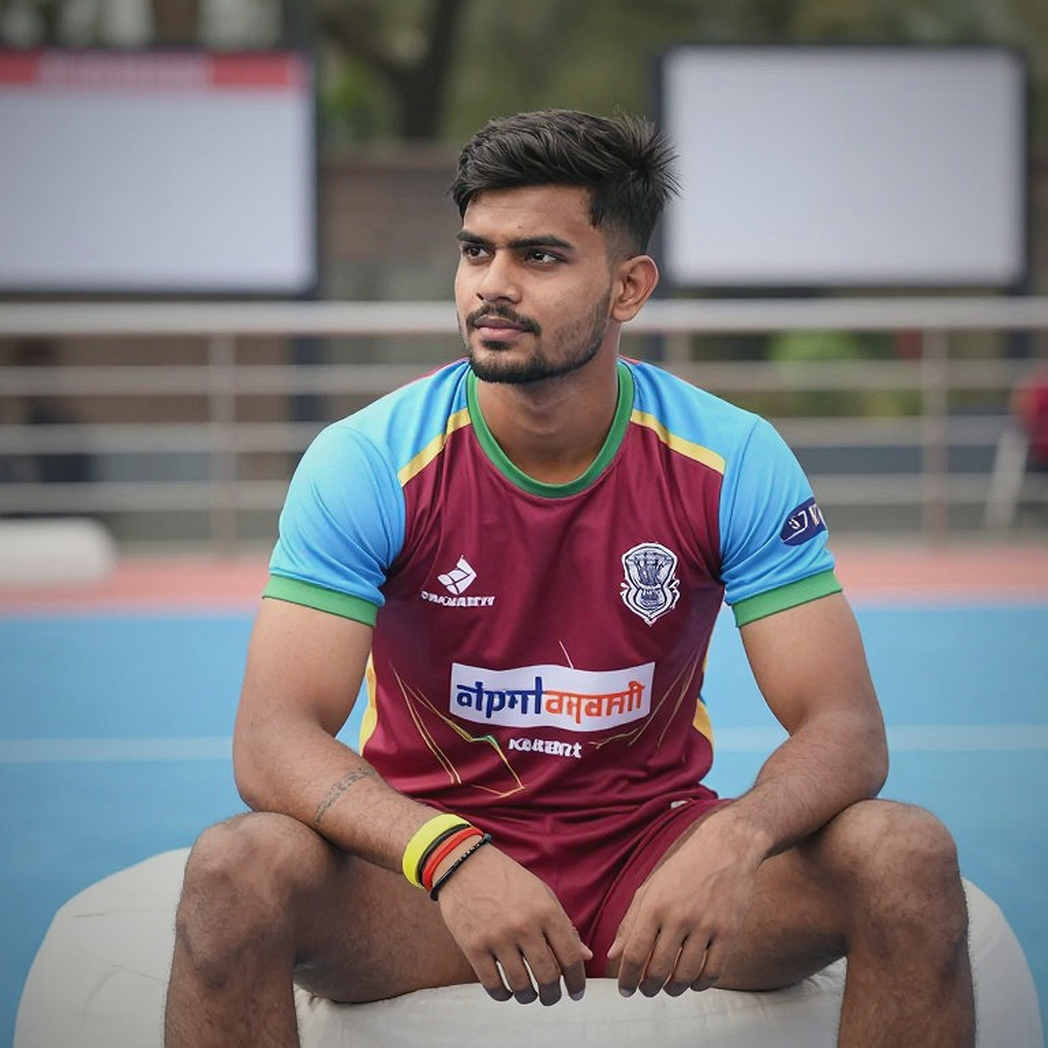
This is where a reporting problem surfaces that the copy ignored. Naveen Kumar and Surjeet Singh are common names in Indian kabaddi; at least one defender shares one of them. The available list gives no state or franchise tag. I went hunting for the official version and found the invoice instead. When a team sheet is all you have to fix a player's identity, every claim about his ceiling becomes an estimate wearing a suit.
Pause on the Commonwealth label too. Kabaddi is not a Commonwealth Games sport, and a Commonwealth Kabaddi Championship is not an established top-tier property on the level of the Asian Games or the IKF World Cup; its sanctioning body and edition history appear nowhere in the official material. When branding is larger than the field, the reader's first job is to ask whose title is being handed out.
And calling Chinese Taipei a major rival of the men's team is laziness borrowed from the women's game. Chinese Taipei is a genuine power in women's kabaddi; in the men's draw it is not a heavyweight. That small error tells you about the copy's quality.
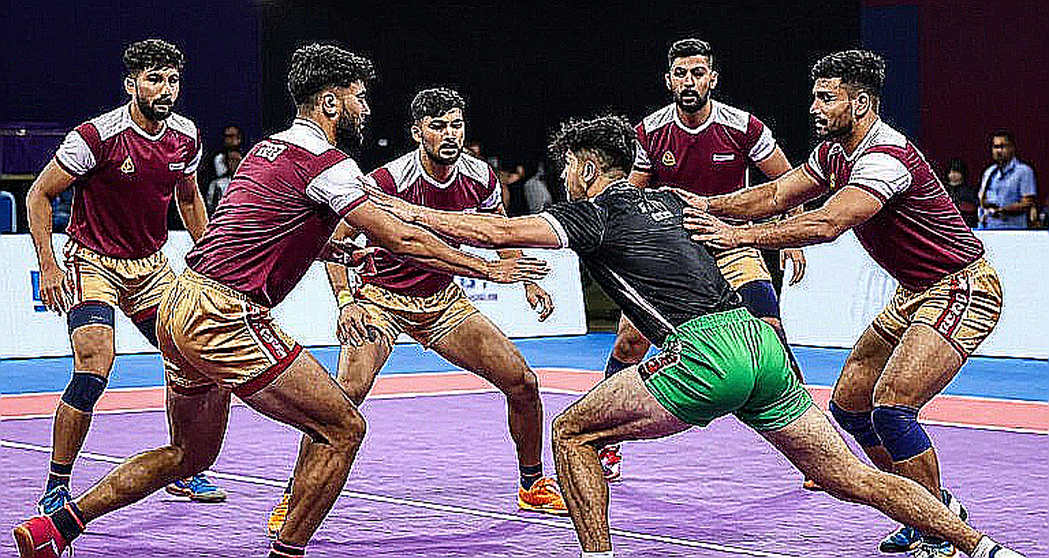
The true benchmark is the Pro Kabaddi League, not this event. Franchise form is a proxy, never proof — international selection, camp time and defensive systems get checked first. Super 10s and High 5s cannot explain a seven-a-side international with a different sample size.
Log one more silence. Six months in the archive taught me that silence has a paper trail. Nowhere in this material does the women's game appear, though India's women own four Asian Games golds and no franchise league. Men-only commercial packaging is what this is, and the long-term damage is to the talent pipeline, not just to publicity.
Now the check on my own call. The first counter-argument is that rotation is a risk. Defensive understanding in kabaddi is built in match time, not in camp. A full-strength run-out before the semifinal builds rhythm, and a young squad that never faces a hard raid can walk into pressure cold. The second counter-argument is that this event's value is cultural and commercial, not competitive. For Punjabi communities in Britain, Canada, Australia and the Gulf, this is the product; India playing is the ticket and the stream. Saying a title without Iran means nothing pushes that audience away from its own sport. Both arguments hold. So this piece is a question, not a verdict — but one thing I will put money on.
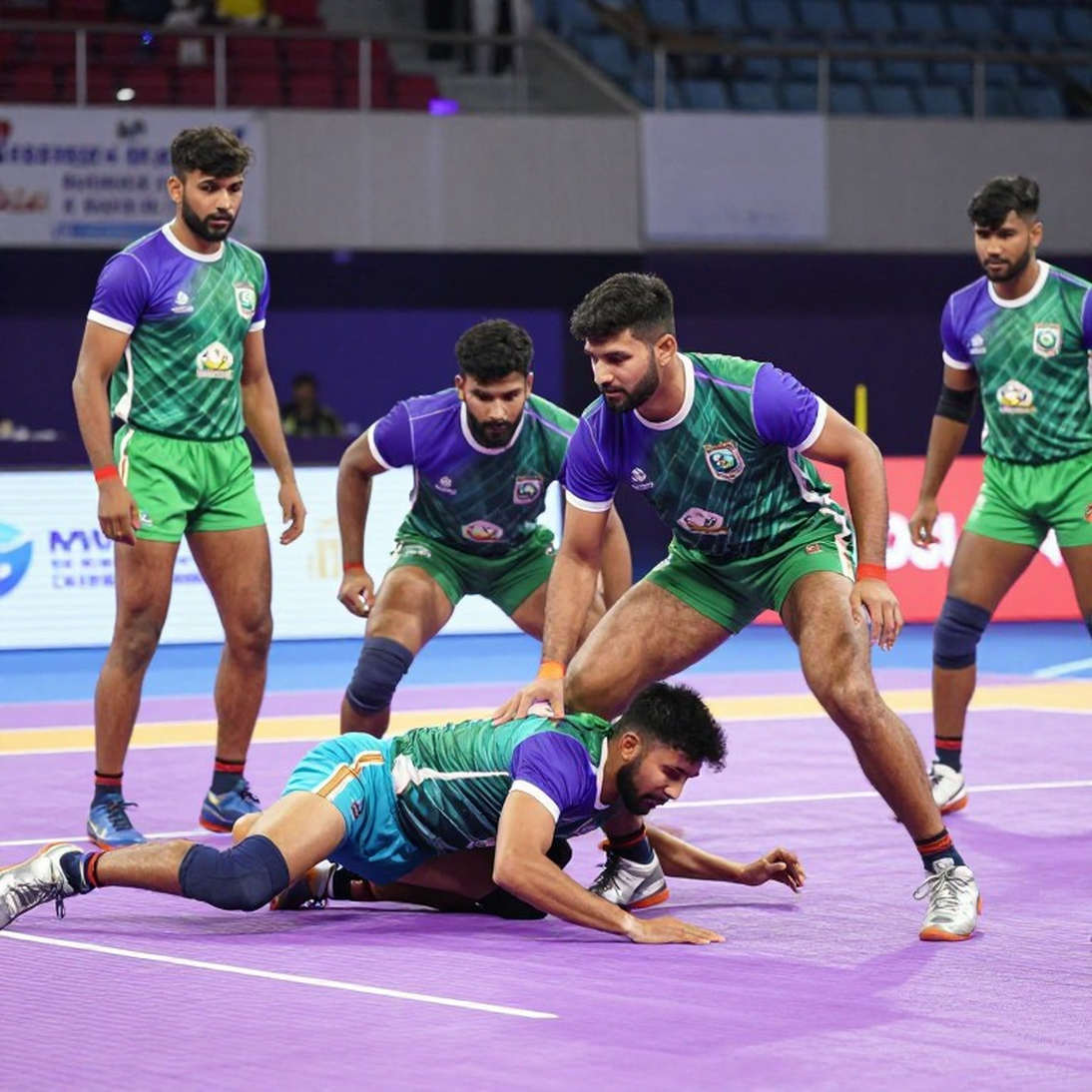
The press box sees the score; the mat sees what the score costs. India will beat England comfortably on Monday night, and the margin will tell us close to nothing. The genuine examination is the semifinal and final, where the strongest surviving side waits. Watch whether a young raider shines on bonus-line singles or scores through a six-man chain. Dated and on the record: whoever collects headlines here on the back of bonus-line points will not make the first-choice squad for the next Asian Games. The Ahmedabad scoreboard will not answer that question.